
Our Daily Routine
9:00 am Arrival
Children are warmly welcomed at the front door by me, and, at times, my two cats. Please help your child remove their shoes and place them on the shoe rack outside. Upon entering the environment, please help your child open their bag. They can then put their lunch box in the fridge and their water bottle on the tray on top of the fridge; this helps them settle in and supports their strong sense of order and independence. A confident, upbeat and predictable goodbye helps your toddler to anchor themselves, and they will choose what they want to engage with. I am there to collaborate and support as well. I have found most toddlers settle in quite effortlessly, as there have been many prior steps taken to build rapport and familiarity, such as my home visit and the short story you have read with your child about coming to Tesorini Montessori.
9:00 - 10:15 am Montessori Work Cycle
An uninterrupted time for self-chosen activity, known as ‘The Montessori Work Cycle’, begins with each child choosing what to engage with. I guide, collaborate and provide personalised presentations of the materials by observing your child and their interests, skills and challenges. Concentration is protected, and I observe, gently get down on their level, and collaborate, taking turns with them to fulfil the sequence (if they need it).
Morning Tea/Food Preparation
This is flexible depending on each child’s individual needs and hunger cues. Generally, children like to eat at around 9:30 am. I encourage a child’s introspection and like to support them noticing their own hunger cues. Food is available on a self-serve basis. Please pack your child healthy snacks without plastic packaging (as much as possible). I am passionate about sustainable behaviours, and like any behaviour role-modelled to them, they are absorbed and embodied by the child only if they see adults doing and participating in them. I have a compost bin inside and a worm farm outside for the children to use, which they are very passionate about.
Food preparation is also offered as a Practical Life activity for your child to choose from throughout the day. This can be anything from slicing a banana, cutting an apple, making orange or mandarin juice, baking bread or cupcakes, or making guacamole or spreading hummus. We are purposeful and seasonal!
10:15 – 11:15 am Outside
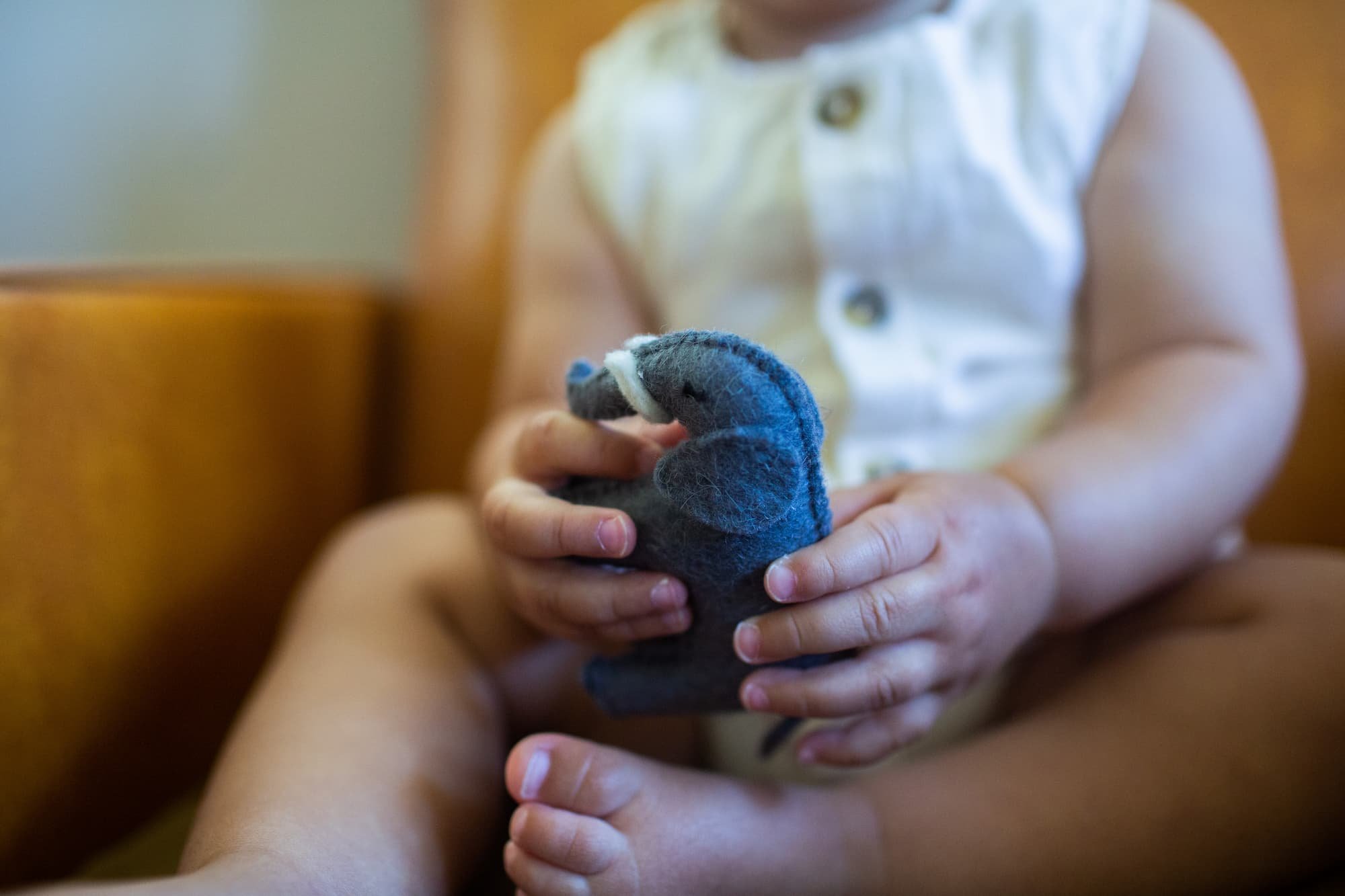
I wind down their work cycle by reading books, singing songs on the ukulele and/or singing with finger puppets. The children each have an ‘elephant mat’ that they sit on during this time, as it provides a concrete, visual cue which helps ground them. They squeal when retrieving the elephant mats, and I ask them if they are going to sit on its trunk or its tail. (Choice making wherever possible at all times). I love singing to the children and try to learn whatever they request, too! Children have the choice of whether to participate or not. Sometimes they join in. Sometimes, they just watch. The music, too, signals to the children that the outdoor environment is now open. The children apply their own Moo Goo sunscreen; I apply mine too, naming all the features on my face. They grab their hats and water bottles and we head out to the garden. Playing with mud, climbing, riding bikes, wheelbarrowing, exploring outdoors, playing with the cats, finding skinks, gardening, caring for plants, water play, reading, relaxing, chit chat - whatever they feel like doing. I have a shade sail with 95% UV protection.
11:15 am - 11:45 am Lunch Preparation and Lunch
Children set the table, retrieve their lunchboxes from the fridge, serve themselves, compost their scraps and put their lunchboxes back. I sit with them with my lunch, and we discuss absolutely everything from the colour, size, texture and shape of our food (and match it to other objects in the room that are the same colour) as well as phonics games and rhyming. I sing nursery rhymes and action songs as well as take requests. It’s a lively time of conversation, laughter and sharing. Shared meal encourages independence and social grace in an organic way. Children are always very interested in what I am eating, so I make sure to role model healthy eating, and I share my fruit and salad vegetables with them. We put our used dishes, cups, and cutlery on the used-dish cart, and place our napkins and face cloths into the laundry basket. The children then spray the table with our home-made vinegar and water solution, wipe and prepare for quiet time. Later on, the children do the washing up, rinsing, and stacking.
11:45 am - 1:30 pm Sleep and Rest Time
I collaborate with each child to help them make their beds. Each child rests according to their individual needs. Some sleep on a floor bed, others engage in quiet, restful activities, such as looking at books. I demonstrate rest and stillness by minimising my movement and sitting on the floor. Even when children don’t sleep, the room feels very zen.
1:30 pm - 2:45 pm Play
Children gently reorient themselves, transitioning from rest to wake in an unhurried manner. Once they have reconnected with their environment, they enter a peaceful and receptive state. At this time of day, I have noticed the children tend to move towards the shelves and engage with activities that centre around fine motor development in particular; puzzles, threading, sewing, gluing and so on. Often, they will ask to go to the patio, which is another outdoor play space that is paved where the children paint using acrylics, slide the little wooden boats down the ramp into the half pipe waterway, use the pulley system to transport water from one wooden structure to another, syphon water, play Hookey or throw the bean bags.
2:45 pm - 3 pm Reading, Singing, Conversation and Home Time
We tidy up the environment as a team, pack bags with daily items such as a water bottle and lunch box, and prepare to go home. I sit on the floor with the children, and we either sing, read poetry, read books, use rhythmic language, or tell oral stories. ( Or all of the above! ) Children have the choice whether to participate or not. Sometimes, they are hungry, so they will take their lunchbox from the fridge, sit at the table and eat.
Families arrive. The children tend to want to invite everyone in so they can show them various materials and so on. It’s a busy and energetic time of day. Children are signed out, we say our goodbyes and that’s our day!
Key Principles Behind our Routine
Consistency builds trust and a sense of order.
Long work cycles protect concentration ( which develops the intellect), self-directed activity, agency and independence.
Individual rhythms respected, flexibility for toileting, rest, and food.
Calm transitions rather than abrupt or rushed changes.
Community participation, children contribute to meal prep, cleaning, and caring for the environment.
Respect for individual needs (sleep, eating, toileting, activities and activity level).
Predictability provides emotional security. ( Very important )
Freedom within structure, children choose within a prepared environment. specifically curated to meet their developmental needs.
Practical life routines (handwashing, dressing, toileting) are integrated naturally.
As a side note, despite the importance of routine and predictability, flexibility is equally important with children. I understand, too, the importance of working alongside parents, especially around sleep, respecting the individual needs and interests of the children, as well as the needs of the group as a whole and accommodating these as best I can.